
Prenatal Breastfeeding Resources
Updated June 2026
Hand Expression
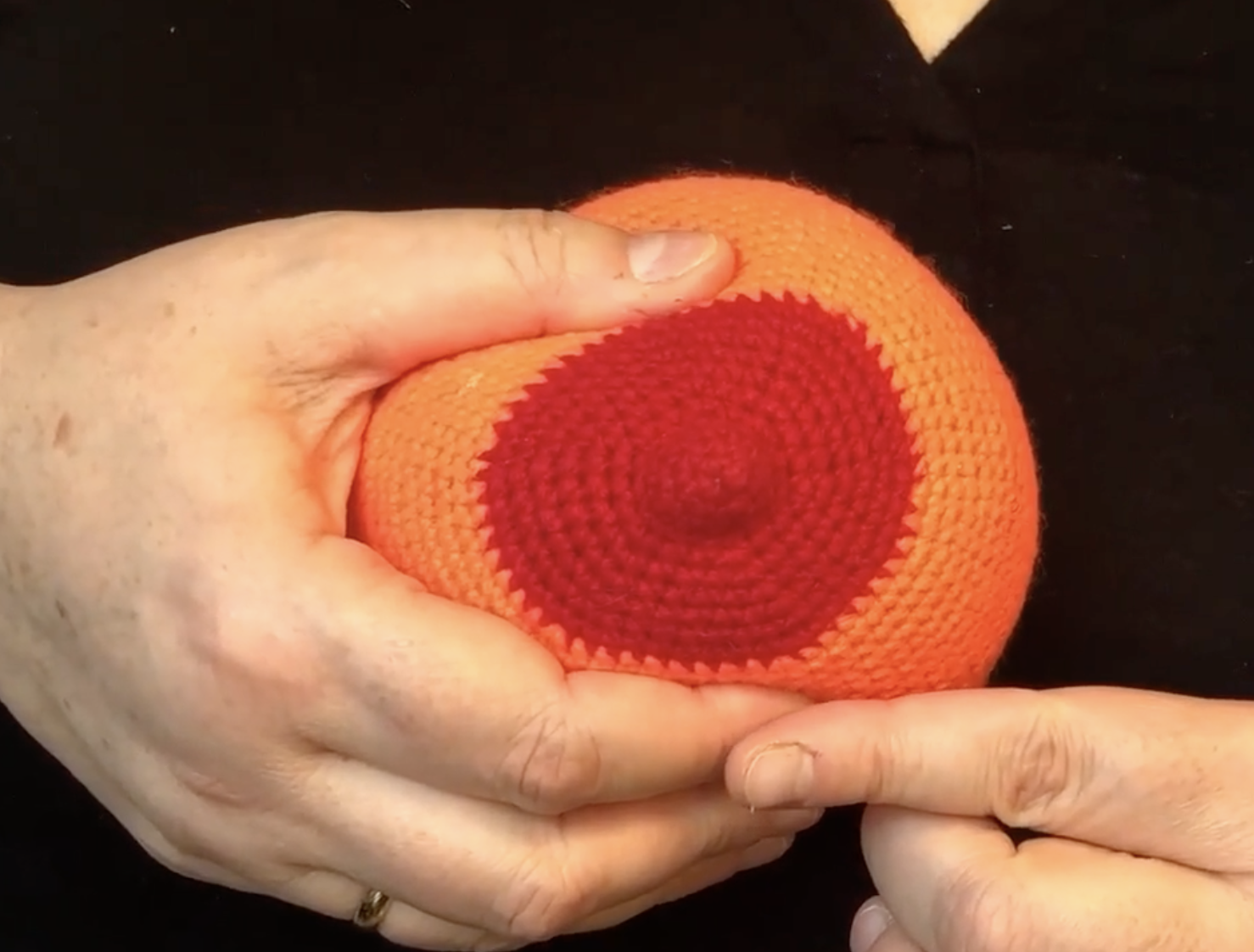
This is the only skill I would be familiar with prior to learning how to breastfeed when arrives.
Hand expression is used throughout the breastfeeding journey from initiation to establishment to weaning!
Watch the videos on made by legends in the lactation field Dr. Jane Morton and Maya Bolman, IBCLC.
You will have an option to watch for a premature and term gestation ages — select which is appropriate for you.
PRESS, COMPRESS!
First Week of Breastfeeding
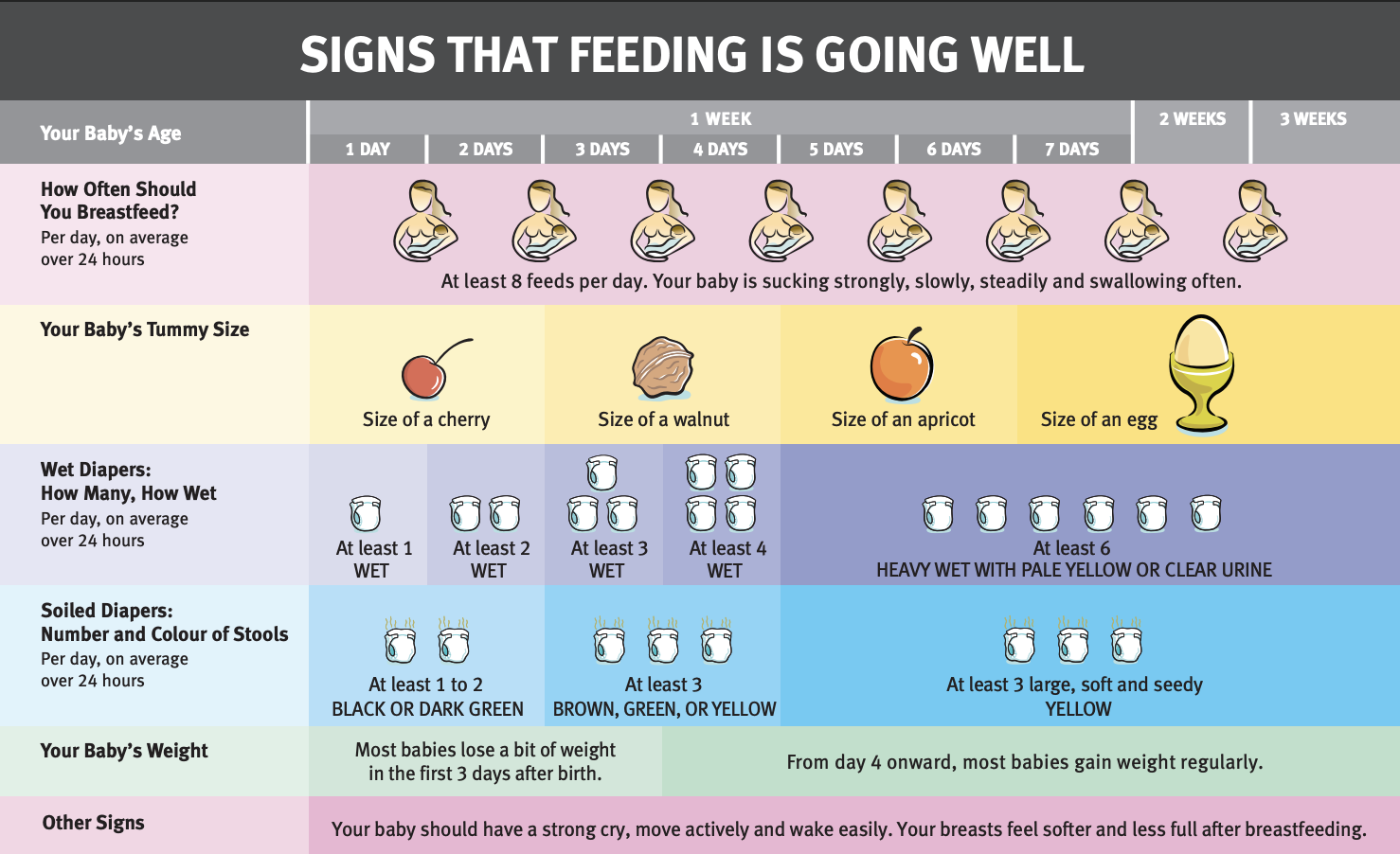
Every. Single. Day. Will. Be. Different.
Colostrum is the first milk and is made in small volumes due to its high concentration of fat and immunity. It acts as a laxative to help pass meconium — the first stool.
The baby’s stomach grows significantly in the first week.
Pees and poops should be INCREASING as the week continues.
The baby will continue to lose weight until milk volume starts to increase on Day 3-4. If you go to the pediatrician on Day 3-4, the baby SHOULD be at the lowest weight from birth.
Babies can take up to 2 weeks, even 3 weeks to get back to birth weight.
Collecting Milk vs Pumping Milk
A passive milk collector (ex. Haaka, Ladybug, Boon Trove, etc) and an electric breast pump (ex. Spectra S1) both collect milk, but they interact with lactation physiology differently.
Think of a passive collector like placing a container beneath a leaky pipe. It primarily captures milk that is already leaking or released during a letdown. Do not use with suction — it causes internal swelling.
An electric pump is designed to actively remove milk. Most pumps mimic aspects of infant feeding by using a rapid stimulation phase to encourage a letdown, followed by slower, deeper expression cycles to remove milk efficiently. Many pumps can also trigger multiple letdowns during a session.
Why does this matter? Milk production is regulated by milk removal. The breast continuously assesses how much milk remains. When milk accumulates, production slows. When milk is removed, the breast receives the message that more milk is needed.
In this way, a passive collector primarily harvests available milk, while an electric pump actively participates in the biological process that helps maintain milk production.
The question is — do YOU specifically need these products postpartum?
If you have NO MEDICAL REASON TO PUMP OR COLLECT MILK TO SUPPLEMENT TO BABY, consider starting pumping once a day at around 3 weeks postpartum so baby can try a bottle if it’s part of your feeding plan in the first year of life!
Antenatal Colostrum Collection:
Consider learning hand expression after 36 weeks and bring the antenatal colostrum collectors to the labor unit if we have not discussed a care plan to include this!
How will I know if nursing is going well?
Baby Signs:
Feeding at least 8–12 times in 24 hours
Active sucking and swallowing at the breast (with breaks!)
Appears satisfied after most feeds
Wet diapers increase each day, reaching at least 6 per day by day 4
Stools transition from black meconium to yellow stools by the end of the first week
Weight loss stabilizes and feeding effectiveness improves
Parent Signs:
Milk production increases around days 2–5 postpartum
Breasts feel softer after feeds
Nipple tissue remains intact without worsening pain or damage
Feeding becomes more comfortable over time
The Big Picture:
It is never about one feed. We are looking for trends and patterns.
Storage of Breastmilk
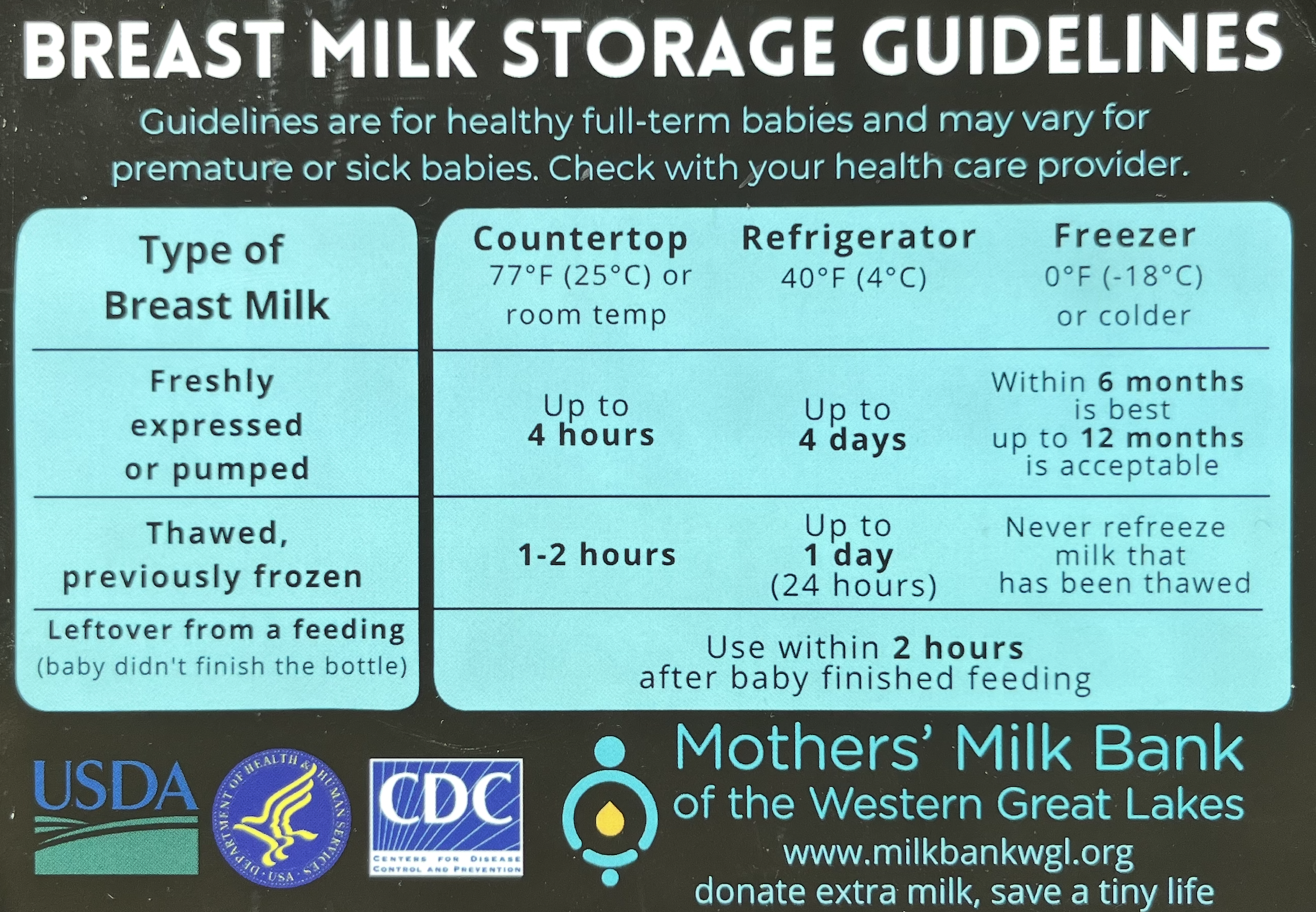
Do you need to express and store your own milk for later use?
Storing your milk according to current recommendations will help maintain its safety and quality.
Following the recommendations can minimize the loss of antibodies, nutrients and antioxidant qualities while in storage.
Before expressing or pumping milk
Milk Storage Guidelines
General storage tips
Storage Containers
Reheating Human Milk
Common Questions
Additional Resources
References
Clusterfeeding: What to expect
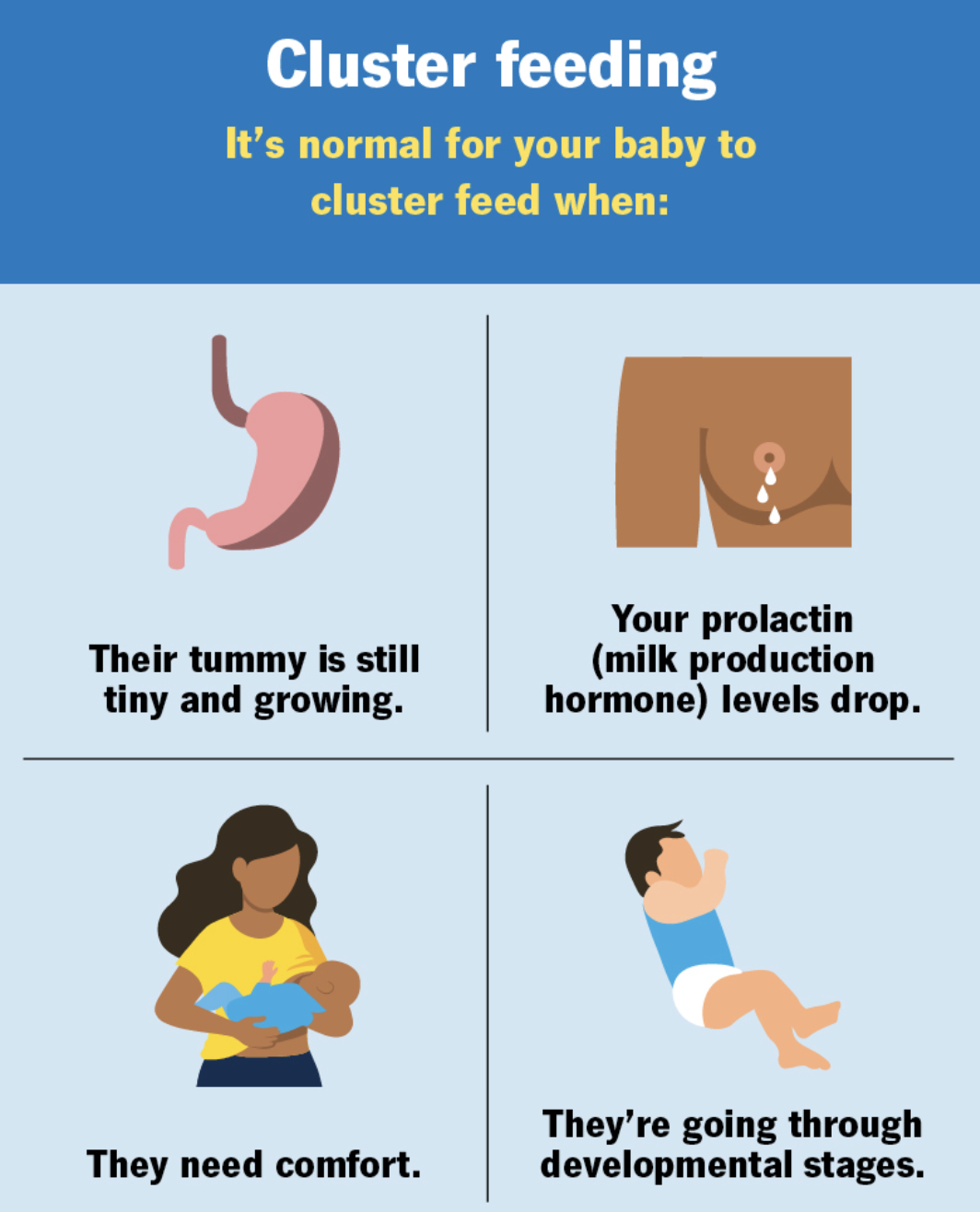
Newborn (first weeks): Cluster feeding often begins on day 1 of a baby’s life, with sessions peaking between days 2 - 5. Newborns may want to feed every hour or so as they adjust to life outside the womb and work to regain their birth weight. This pattern may continue on and off until they’re around 2 weeks old.
3 - 6 weeks: Another cluster feeding phase may begin around 3 weeks and again at 6 weeks, aligning with growth spurts. These sessions may stretch across several hours, especially in the evening.
Around 3 months (12 weeks): Babies begin cluster feeding again around 3 months as mom’s body transitions to a true supply and demand. Evening cluster feeding may be more noticeable during this stage.
Around 6 months (24 weeks): While less common, some babies may experience a brief return to cluster feeding around 6 months, often due to developmental changes (like learning to sit up) or a growth spurt.